
Metal stamping cost is not based on one simple number. A quote usually combines material, tooling, press time, part complexity, order volume, finishing, inspection, packaging, and lead time. Two parts may look similar on a drawing, but small differences in tolerance, material grade, burr limits, or annual demand can change the final price.
At ZAK, we quote stamping projects by looking at the whole manufacturing path. That includes the die, press setup, material utilization, secondary operations, quality checks, and shipment plan. This helps buyers compare quotes more clearly and avoid surprises after tooling starts.
If you are preparing a new RFQ, this guide explains the main cost drivers and what you can do to get a faster, more accurate quote.
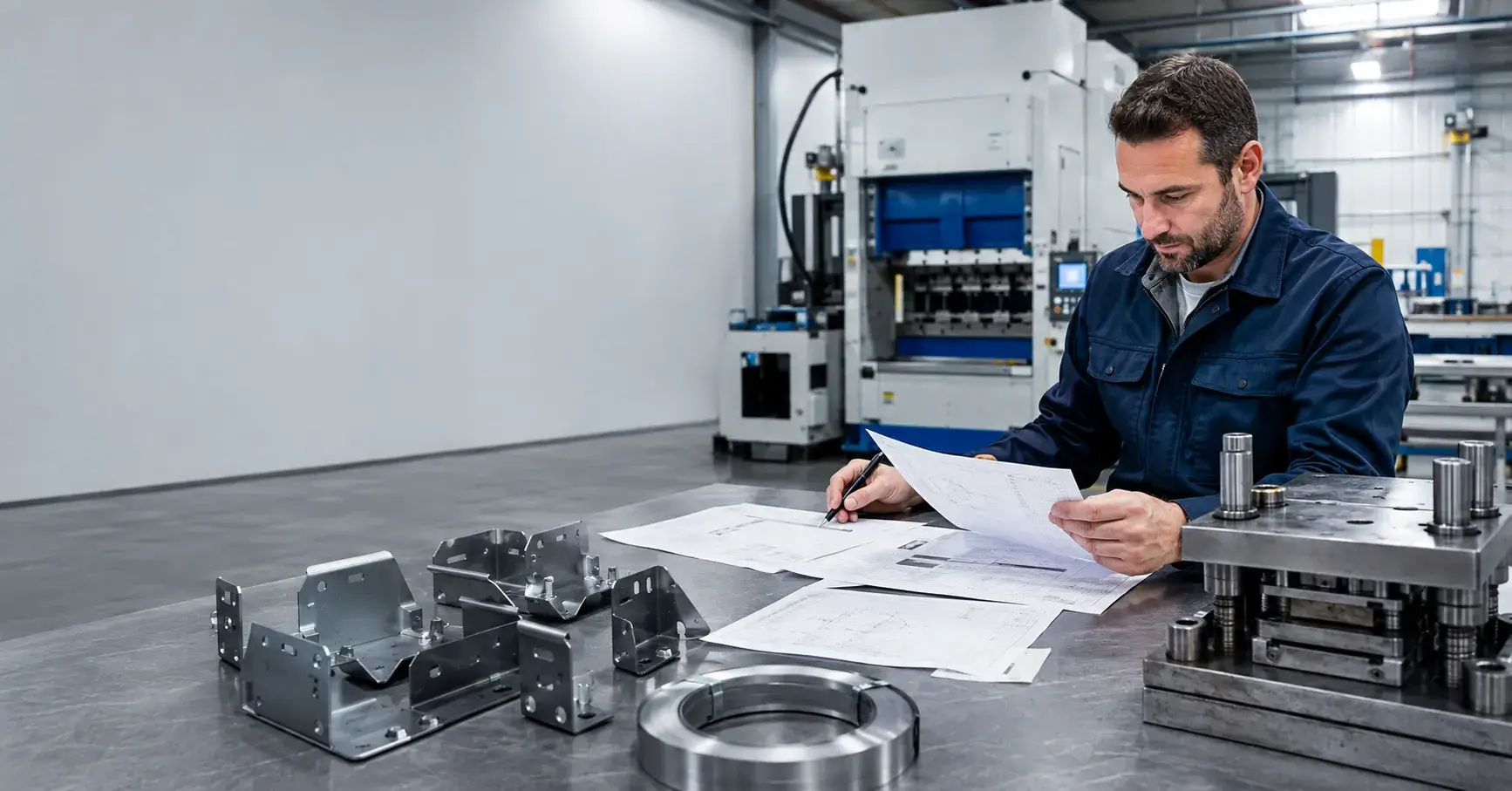
The biggest cost factors are:
| Cost factor | Why it matters |
|---|---|
| Material | Grade, thickness, coil width, market price, and scrap rate affect part cost. |
| Tooling | Simple blanking tools cost less than complex progressive dies or deep draw dies. |
| Order volume | Higher volume spreads tooling and setup cost across more parts. |
| Part geometry | Tight bends, small holes, deep forms, and complex features can increase die complexity. |
| Tolerances | Tight or unclear tolerances can increase tooling, inspection, and scrap risk. |
| Secondary operations | Tapping, welding, deburring, cleaning, plating, coating, and assembly add cost. |
| Quality requirements | PPAP, CMM reports, material certificates, traceability, and special inspection add work. |
| Lead time | Urgent tooling, special material, or expedited freight can raise the quote. |
The lowest quote is not always the best quote. A good stamping quote should show whether the supplier understands the part, the tooling path, and the production risk.
1. Material Type, Grade, And Thickness
Material is often one of the largest parts of the final piece price. A stamped part made from cold-rolled steel will not cost the same as stainless steel, aluminum, brass, copper, or high-strength steel. The grade also matters. For example, cold-rolled steel sheet can cover commercial steel, drawing steel, deep drawing steel, structural steel, and high-strength low-alloy grades under cold-rolled steel sheet specifications.[^1]
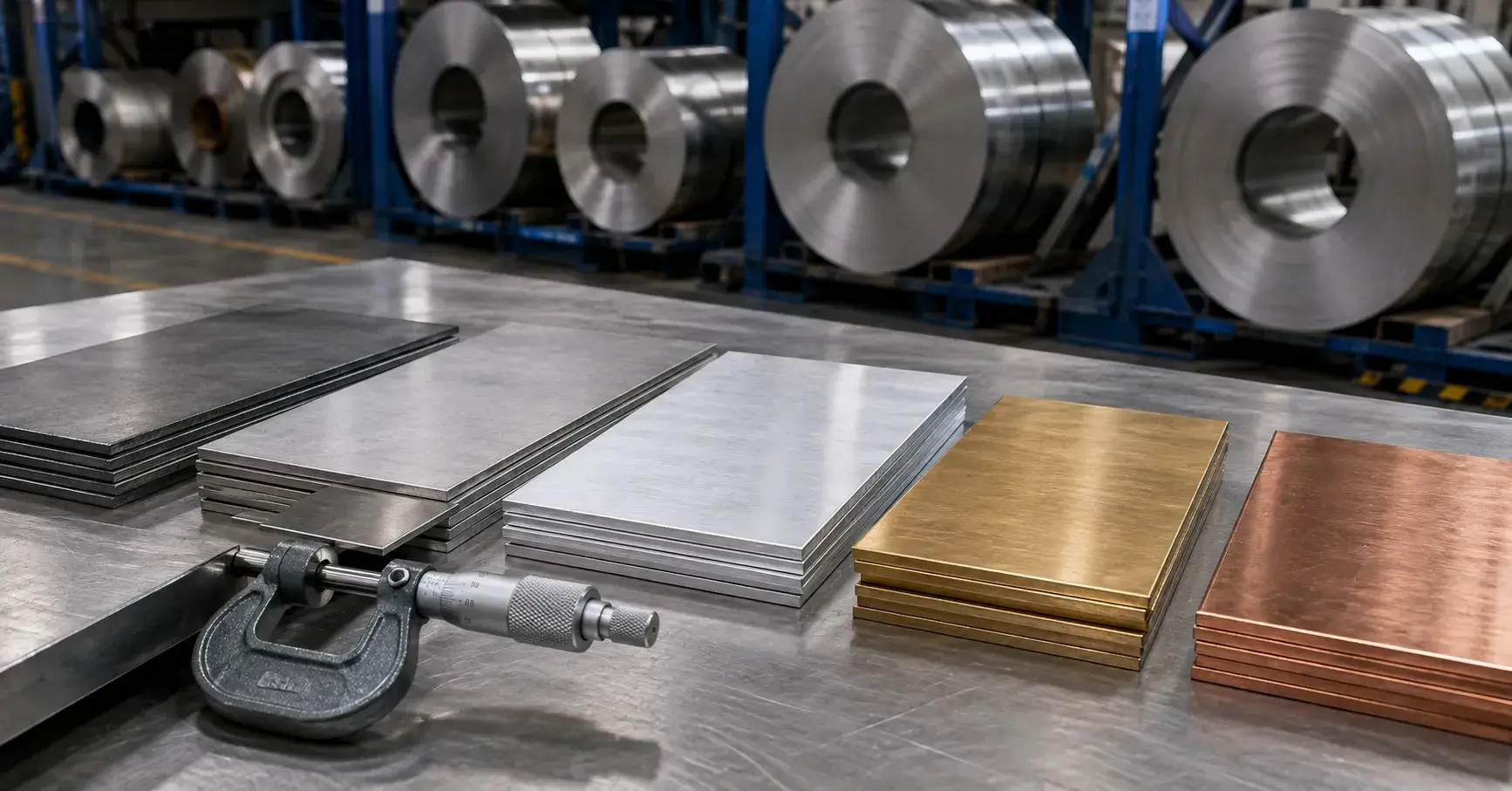
Thickness affects both material cost and press tonnage. Thicker material usually costs more per part because it uses more metal and may require more forming force. It can also require stronger tooling and slower production speeds.
Material price also changes over time. Buyers should expect quotes to reflect the current market, especially for steel, stainless steel, aluminum, copper, and brass. Public indexes such as the iron and steel producer price index show why material timing can affect a stamping quote.[^2]
For a cleaner RFQ, tell the supplier:
- Required material grade
- Thickness and thickness tolerance
- Temper or hardness requirement
- Surface requirement
- Approved substitute materials, if allowed
- Annual volume and release schedule
If the material is not fixed yet, ask for options. Sometimes a small grade change can improve formability, reduce cracking, or lower scrap.
2. Scrap Rate And Material Utilization
Metal stamping starts with sheet or coil stock. The die layout decides how efficiently that material becomes finished parts. Scrap comes from the strip carrier, web spacing, pilot holes, edge trim, forming development, and rejected parts.
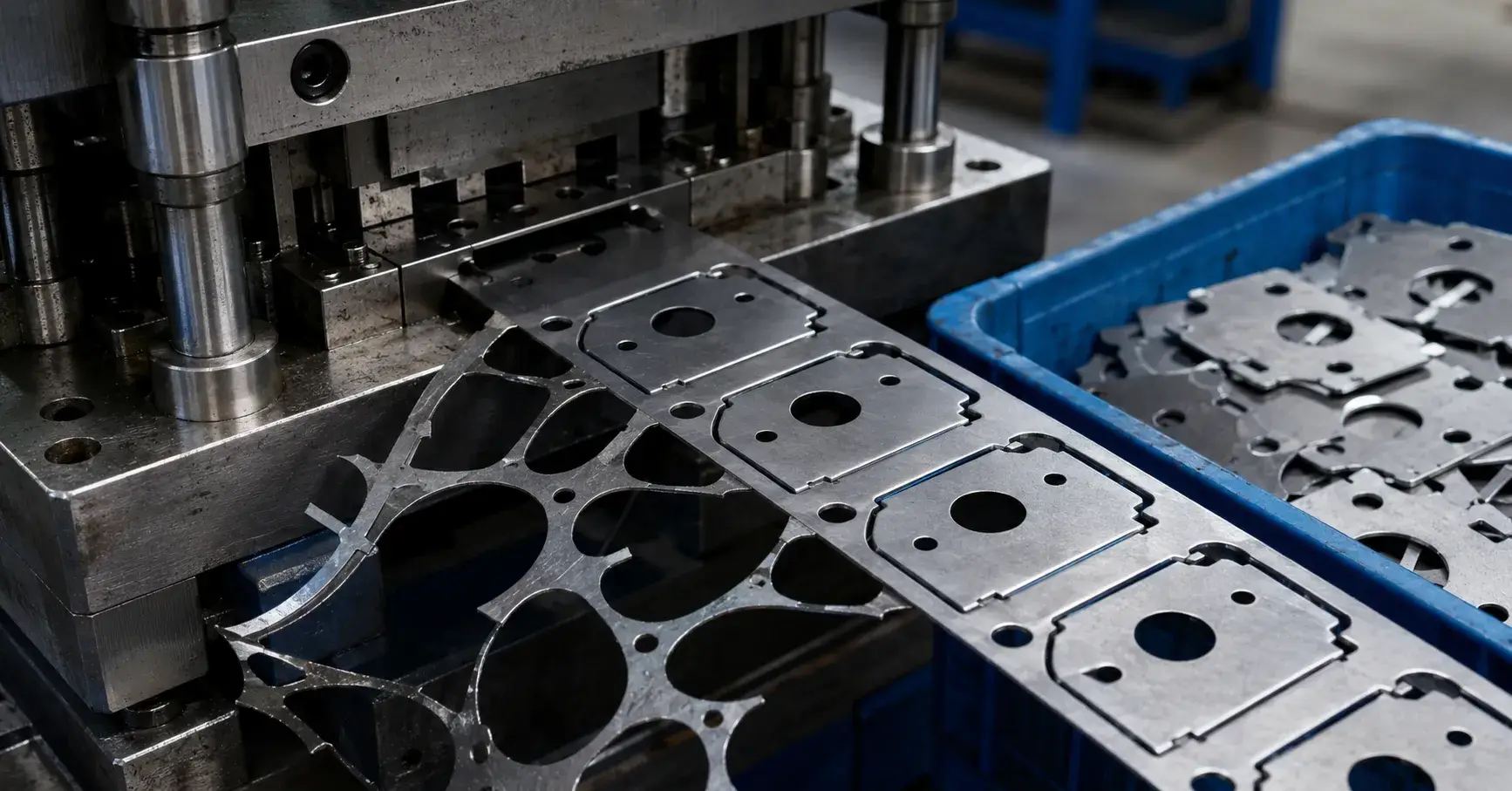
This is why part orientation and nesting matter. A small change to the blank shape can improve material utilization. For high-volume projects, even a small scrap reduction can save real money over the life of the program.
When we review a custom metal stamping project, we look at material flow before locking the quote. A part with a lower piece price but high scrap risk may not be the best long-term choice.
3. Tooling Type And Die Complexity
Tooling is the main reason stamping cost changes so much from project to project. A simple blanking tool costs less than a progressive die. A deep draw die costs differently from a forming die. A die with cams, lifters, tight pilots, sensors, and complex stations costs more than a basic tool.
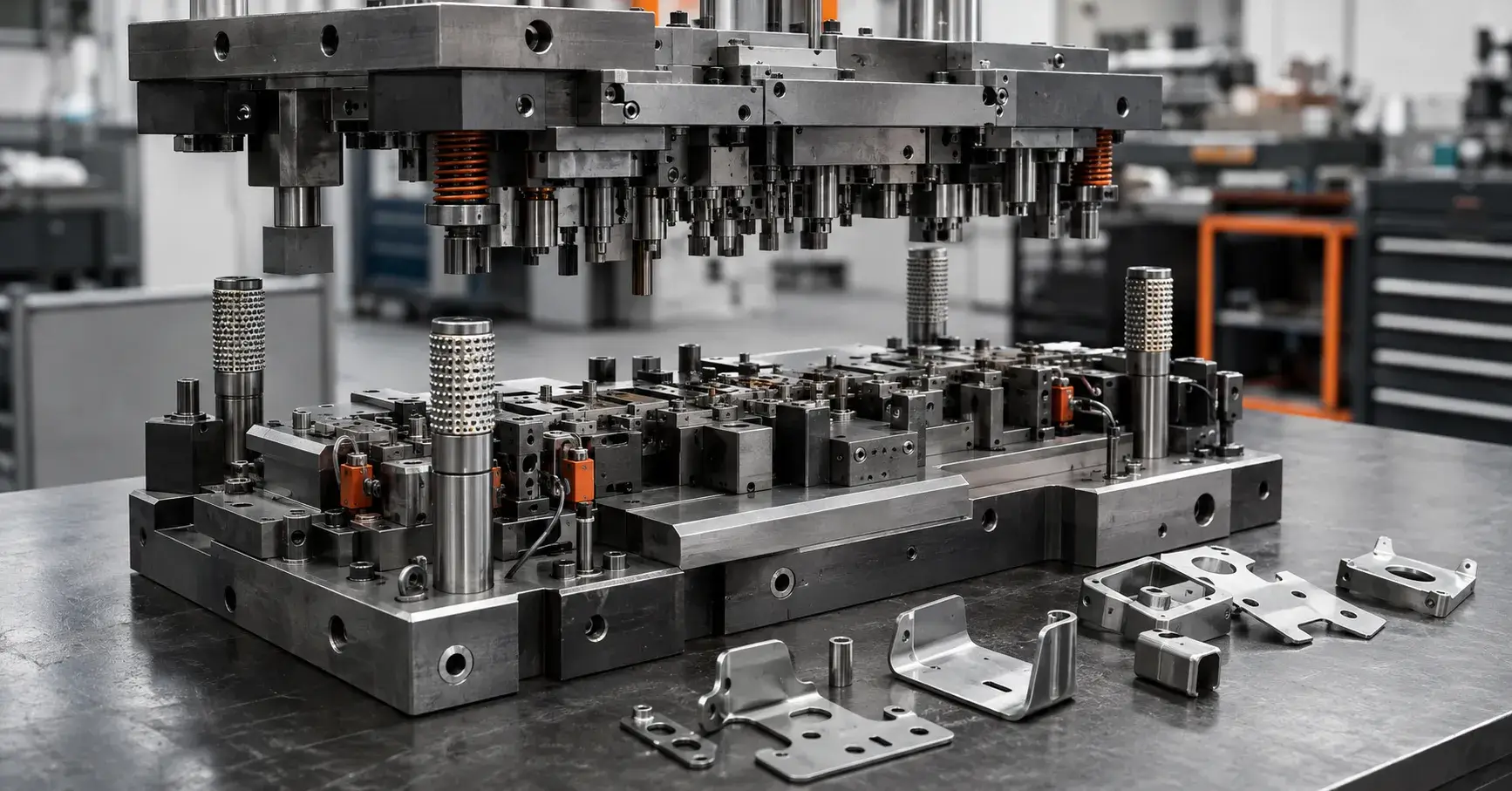
The right tooling choice depends on:
- Part shape
- Required volume
- Tolerance level
- Material behavior
- Number of forming steps
- Expected tool life
- Production rate
- Future design stability
For high-volume work, progressive die stamping often lowers piece price because many operations happen in one die. The upfront die cost is higher, but the production speed can be much better.
For lower volume, a simpler tool may make more sense. It may not produce the lowest piece price, but it can reduce the upfront investment. This is why annual demand matters as much as part geometry.
4. Tooling Amortization And Order Volume
Tooling cost can be handled in different ways. Some buyers pay the full tooling cost upfront. Others ask for tooling amortization, where part of the tool cost is spread into the piece price over a planned volume.
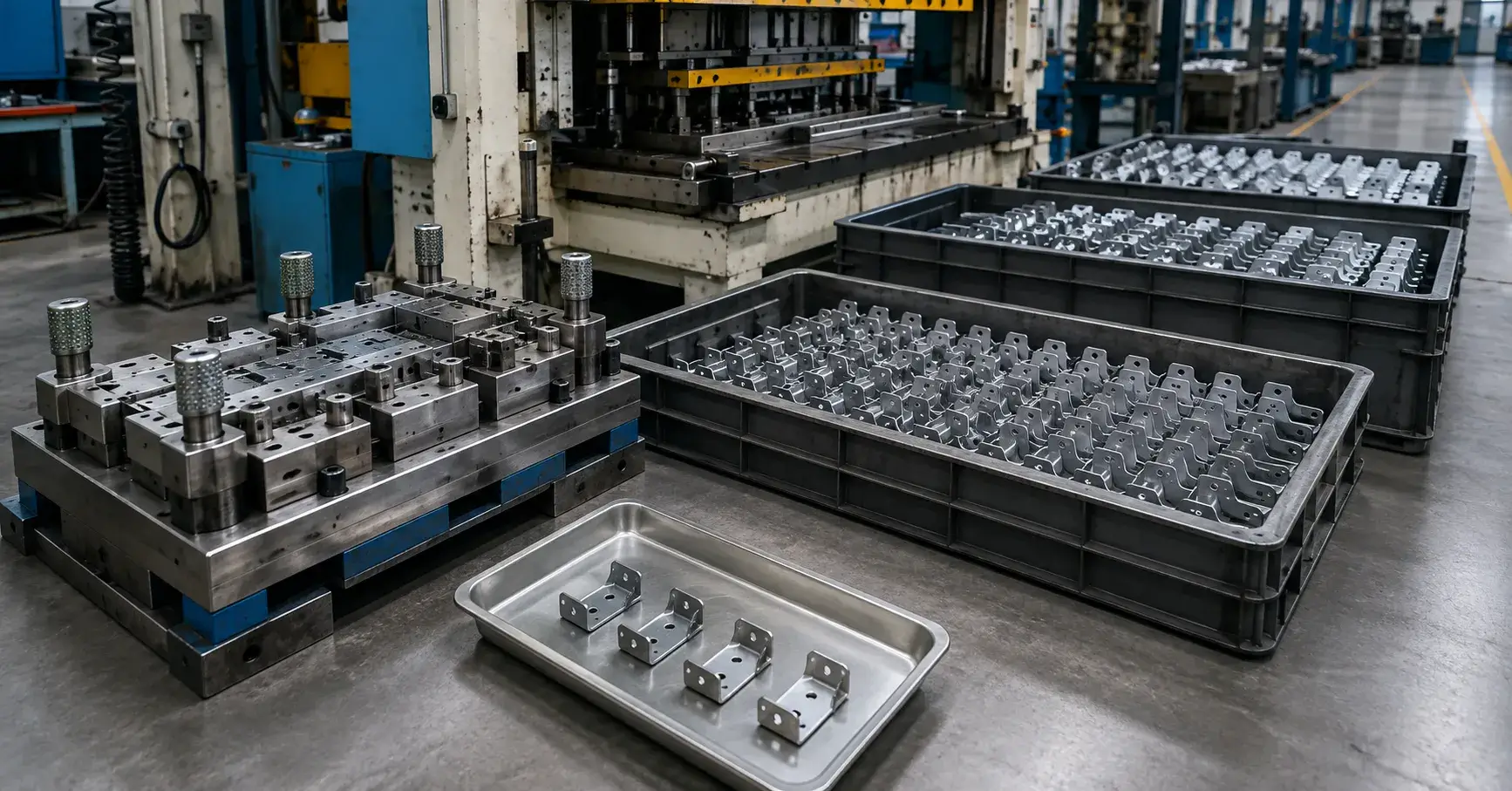
This changes the quote structure. A 5,000-piece order and a 500,000-piece annual program should not be quoted the same way. Higher volume spreads setup, engineering, and tooling cost across more parts.
Volume also affects the best manufacturing method. A prototype batch may be better suited to laser cutting, bending, or soft tooling. A stable, high-volume program may justify a hardened progressive die. If the product is still changing, it is often better to delay hard tooling until the design is stable.
5. Part Geometry And Forming Difficulty
Part shape affects die cost, press speed, and reject risk. Cost often increases when the design includes:
- Deep forms or high draw ratios
- Narrow slots
- Small holes close to bends
- Sharp corners
- Tight inside radii
- Long flanges
- Embosses or ribs
- Multiple forming directions
- Features that need special die actions
Deep drawn parts need extra attention. Material must flow without tearing, wrinkling, or thinning too much. A deep draw stamping project may need draw beads, blank holder control, more forming stages, and careful lubrication.
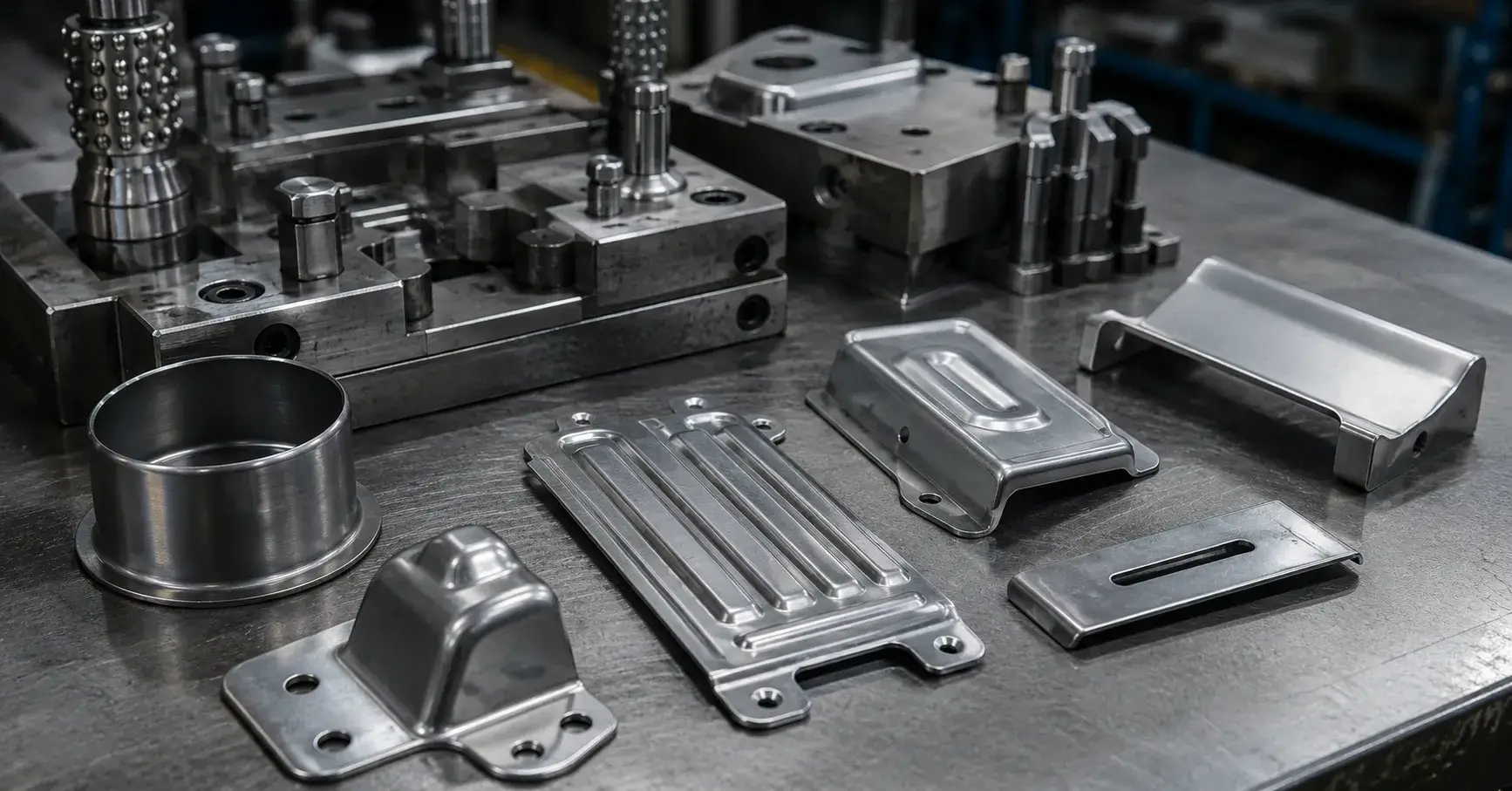
This is also where design for manufacturability matters. A cost-effective stamped part is not just a part that can be made. It is a part that can be made repeatedly, at speed, with stable quality.
6. Tolerances And Drawing Clarity
Tolerances can quietly raise the price. A tight tolerance may require a more accurate die, more tryout time, slower production, more inspection, or secondary sizing. It may also increase scrap if the tolerance is tighter than the process can hold reliably.
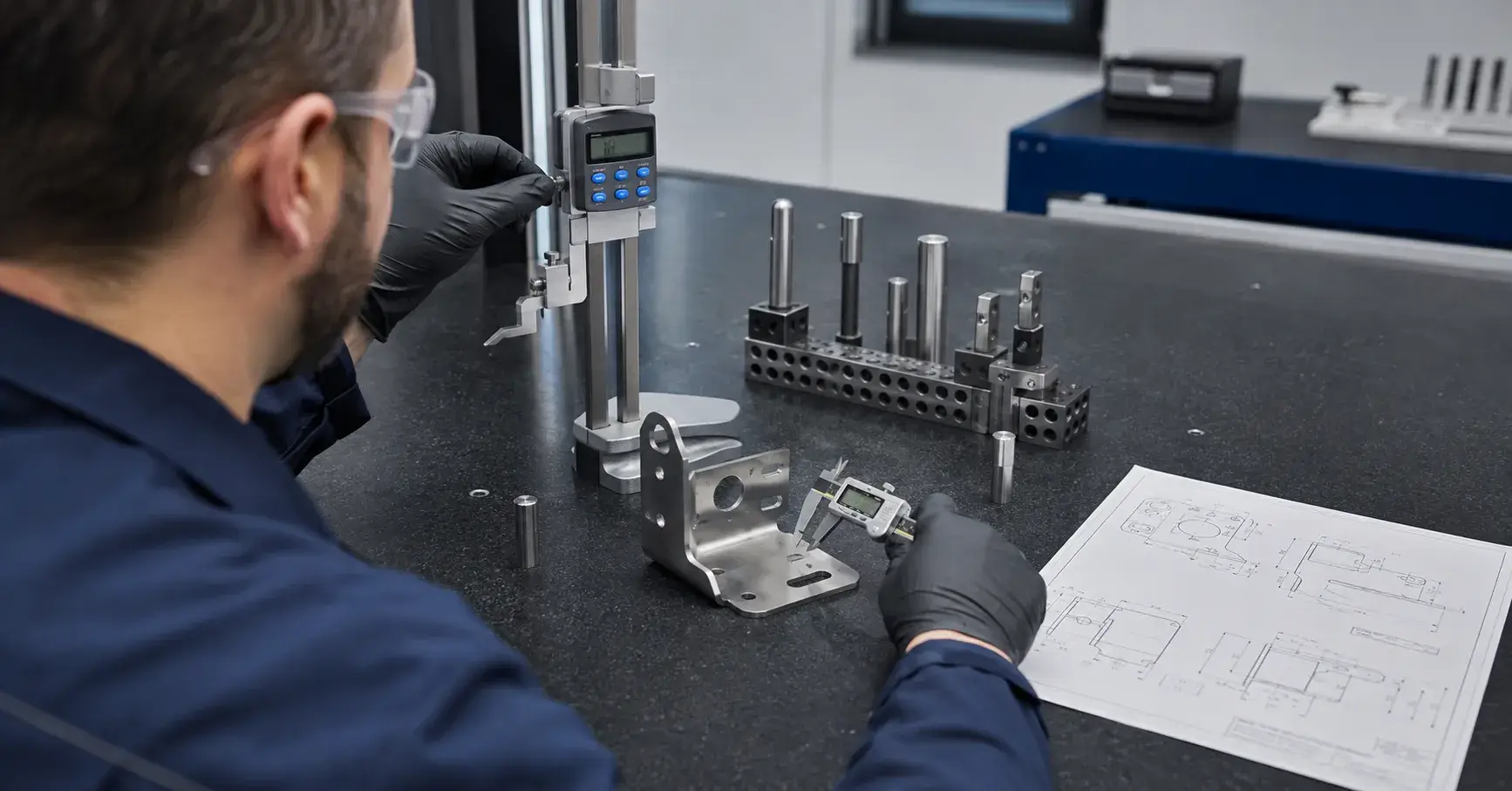
This does not mean you should avoid tight tolerances. It means each tolerance should match the function of the part. Use tight tolerances where the part fits, seals, aligns, or controls an assembly. Keep non-critical features at practical tolerances.
Clear drawings also reduce quoting risk. GD&T is useful when it communicates how the part functions, but unclear datum schemes or missing tolerance blocks can slow the quote. Standards such as ASME Y14.5 are often used to define dimensioning and tolerancing rules.[^3]
If you want a cleaner quote, provide:
- 2D drawings with tolerances
- 3D CAD files
- Datum references
- Critical-to-function dimensions
- Surface and burr requirements
- Inspection requirements
- Approved drawing revision
Our engineering support team can review drawings early and point out features that may raise tooling cost or production risk.
7. Press Size, Tonnage, And Production Speed
Press selection affects cost. A small, simple part may run on a smaller press at high speed. A large, thick, or deep formed part may need a larger press with more tonnage and slower speed.
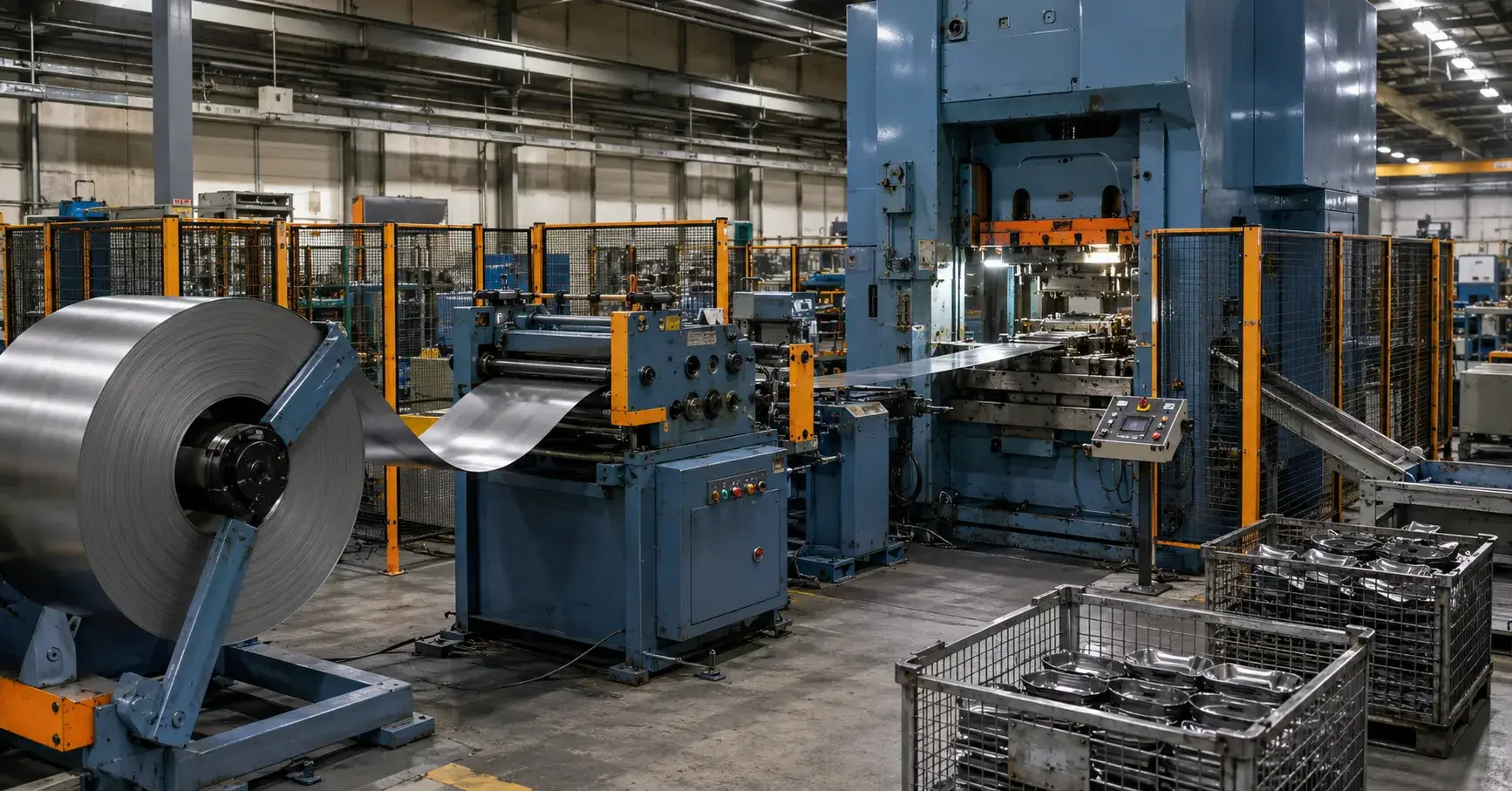
Tonnage depends on material strength, thickness, cut length, forming load, and part size. If the press is undersized, quality and tooling life can suffer. If the part needs a much larger press, the hourly rate is usually higher.
Press safety and guarding also matter in stamping operations. OSHA has specific requirements for mechanical power presses, including guarding and construction requirements.[^4] Good suppliers account for safe, repeatable production when they build the process.
8. Secondary Operations
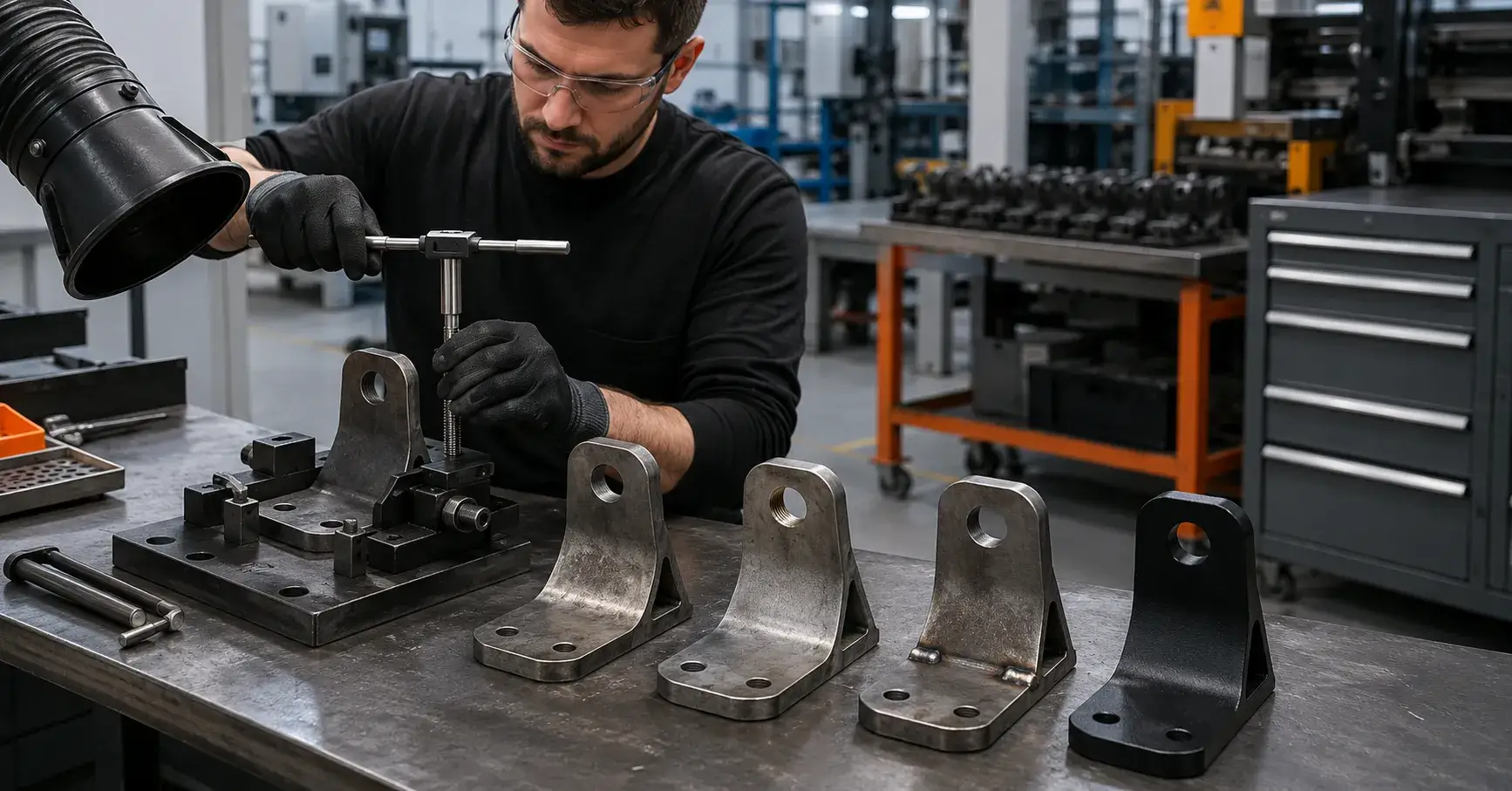
Many stamped parts are not complete when they leave the press. They may need:
- Deburring
- Tapping
- Riveting
- Welding
- Cleaning
- Heat treatment
- Assembly
- Plating
- Powder coating
- Anodizing
- Packaging
Each added step affects price, lead time, and quality control. For example, a stamped bracket with threaded holes may need tapping after stamping. A visible enclosure part may need brushing, polishing, powder coating, or protective film.
If your part needs corrosion resistance or a cosmetic finish, include the finish requirement in the RFQ. ZAK supports surface finishing options for sheet metal and stamped parts, so finishing can be planned with production instead of treated as an afterthought.
9. Quality, Inspection, And Documentation
Quality requirements can affect the quote as much as geometry. A basic commercial part may need standard checks. An automotive, medical, electrical, or safety-related part may need stronger documentation.
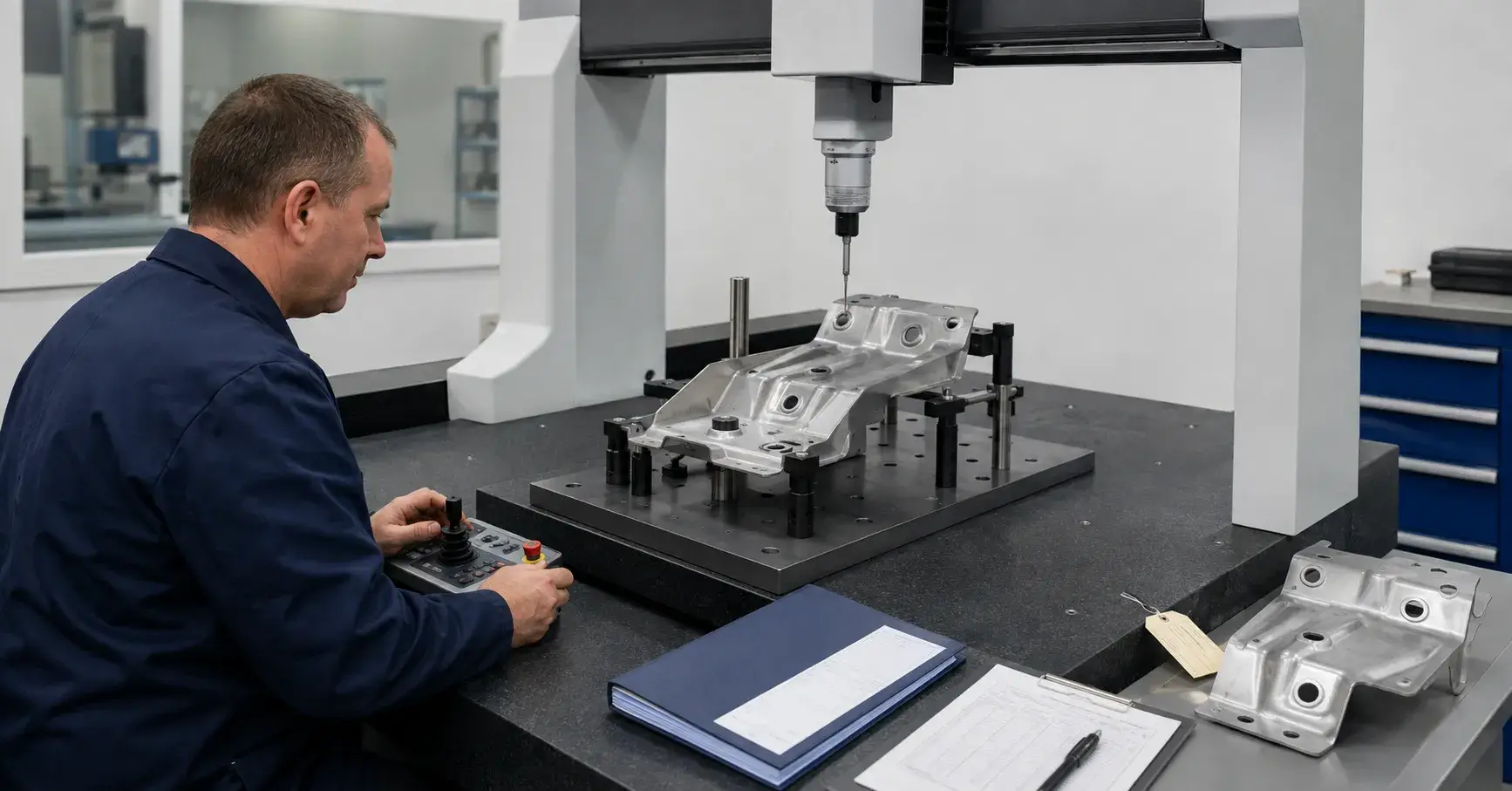
Common quality requirements include:
- Material certificates
- First article inspection
- CMM reports
- Production part approval process documentation[^6]
- Control plan
- FMEA
- SPC
- Full traceability
- Special packaging checks
ISO 9001 is a widely used quality management standard. ISO describes it as a standard that helps organizations improve performance, meet customer expectations, and show commitment to quality through a defined quality management system.[^5]
At ZAK, our quality control process is built around inspection planning, traceability, and process control. For buyers, the key is to state documentation needs before quoting. Adding reports after production starts can create delays and extra cost.
10. Lead Time And Urgency
Standard lead time gives the supplier time to review the design, order material, build or adjust tooling, run samples, inspect parts, and prepare shipment. Urgent orders may require overtime, faster material purchasing, priority tooling, or express freight.
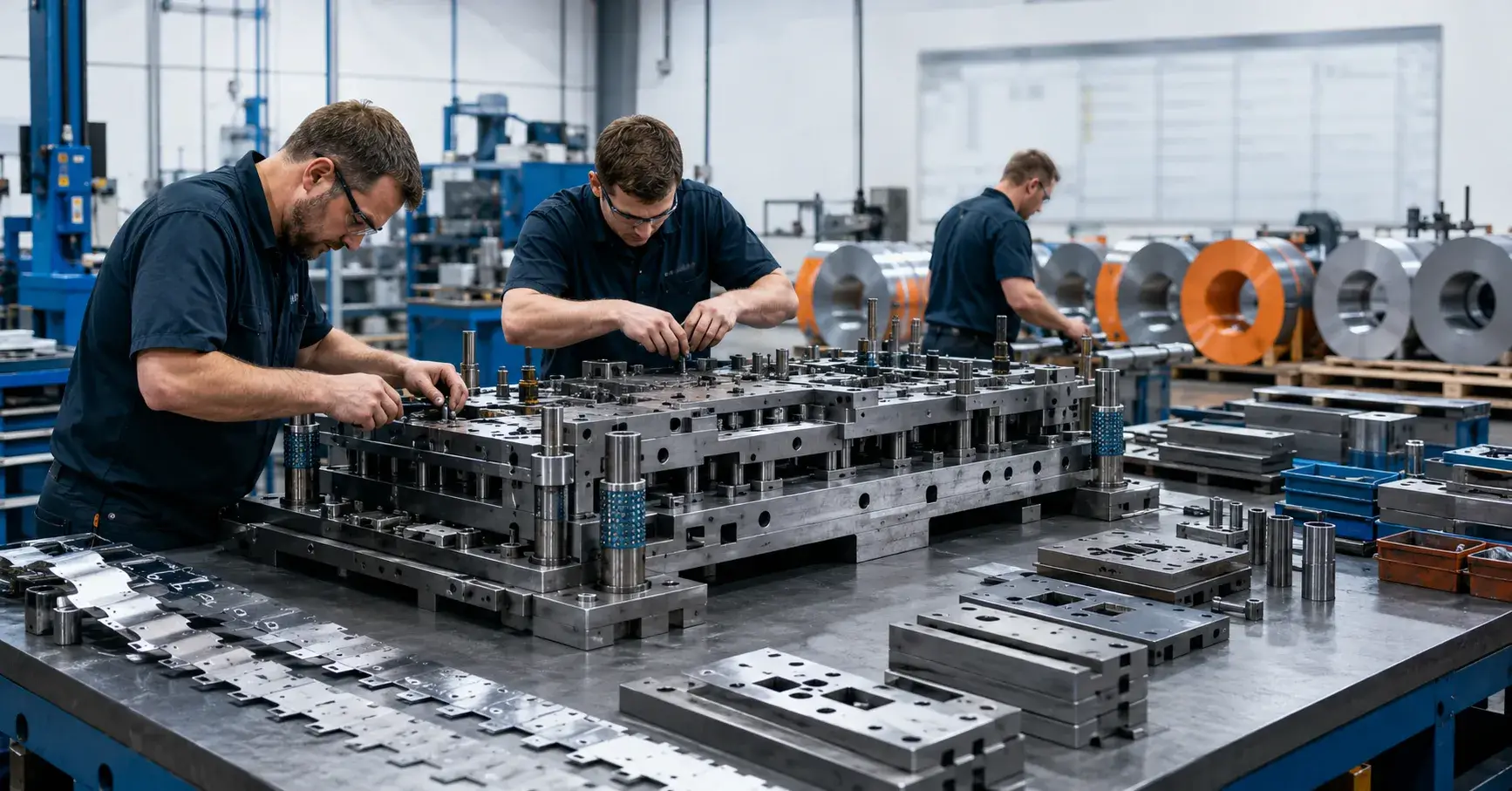
Tooling lead time can be the biggest schedule item. A simple tool may move quickly. A complex progressive die or deep draw die needs design, machining, wire EDM, fitting, tryout, correction, and sample approval. In-house tool and die making can reduce handoff risk because tooling engineers and production teams work together.
If your project has a launch date, share it early. A supplier can suggest a phased plan, such as prototype parts first, pilot production next, and full production after approval.
11. Packaging, Shipping, And Part Protection
Packaging is easy to overlook, but it can affect total landed cost. Thin, cosmetic, plated, or powder-coated parts may need separators, trays, protective film, custom cartons, or special pallet patterns.
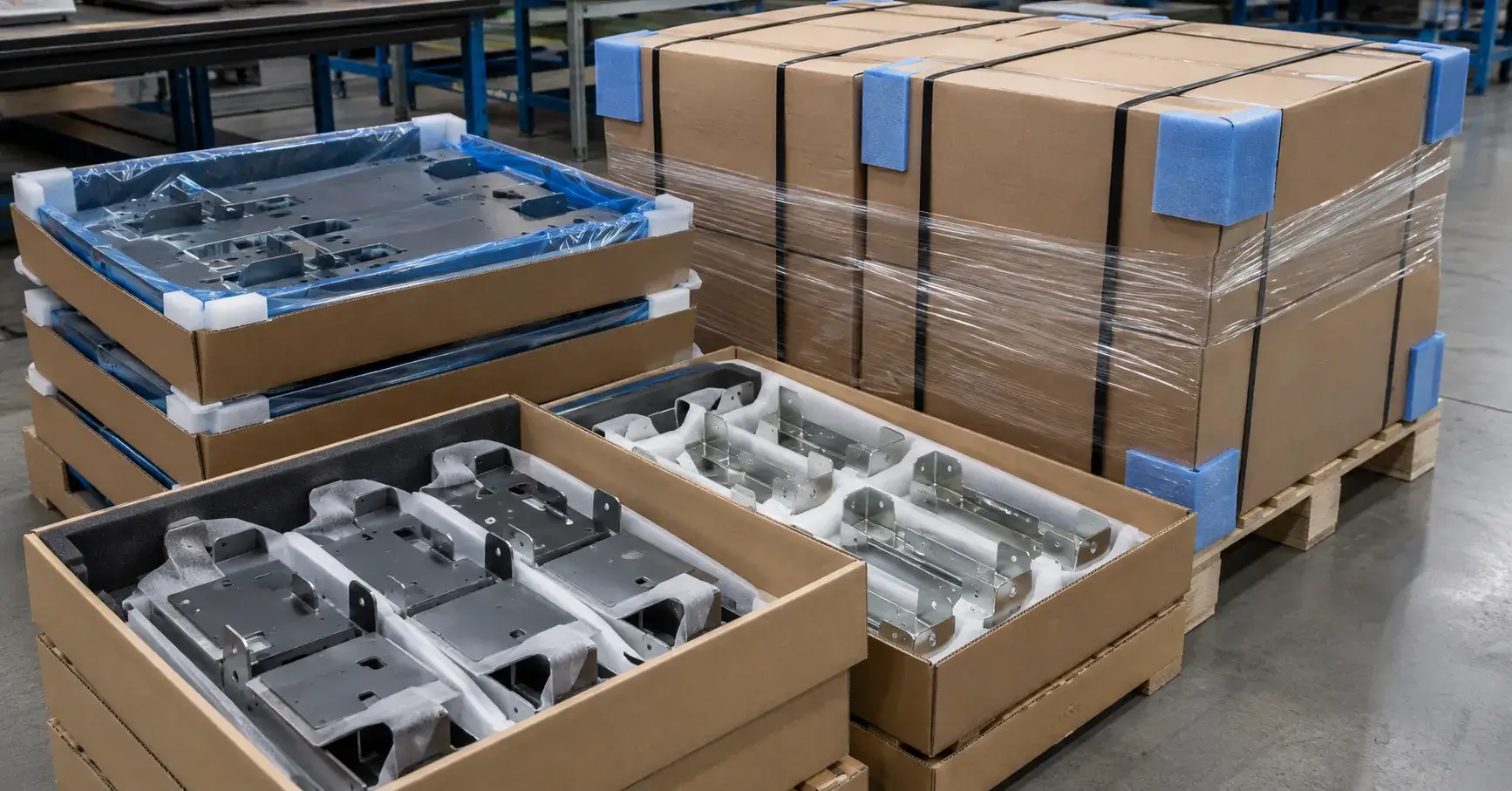
Poor packaging can turn a good production run into a receiving problem. Scratches, bent tabs, mixed revisions, and unclear labels all cost time. If the part has cosmetic surfaces or assembly-sensitive features, include packaging expectations in the quote request.
Shipping terms also matter. Air freight, partial shipments, and urgent delivery cost more than planned sea or ground shipment.
How To Reduce Metal Stamping Cost Before You Request A Quote
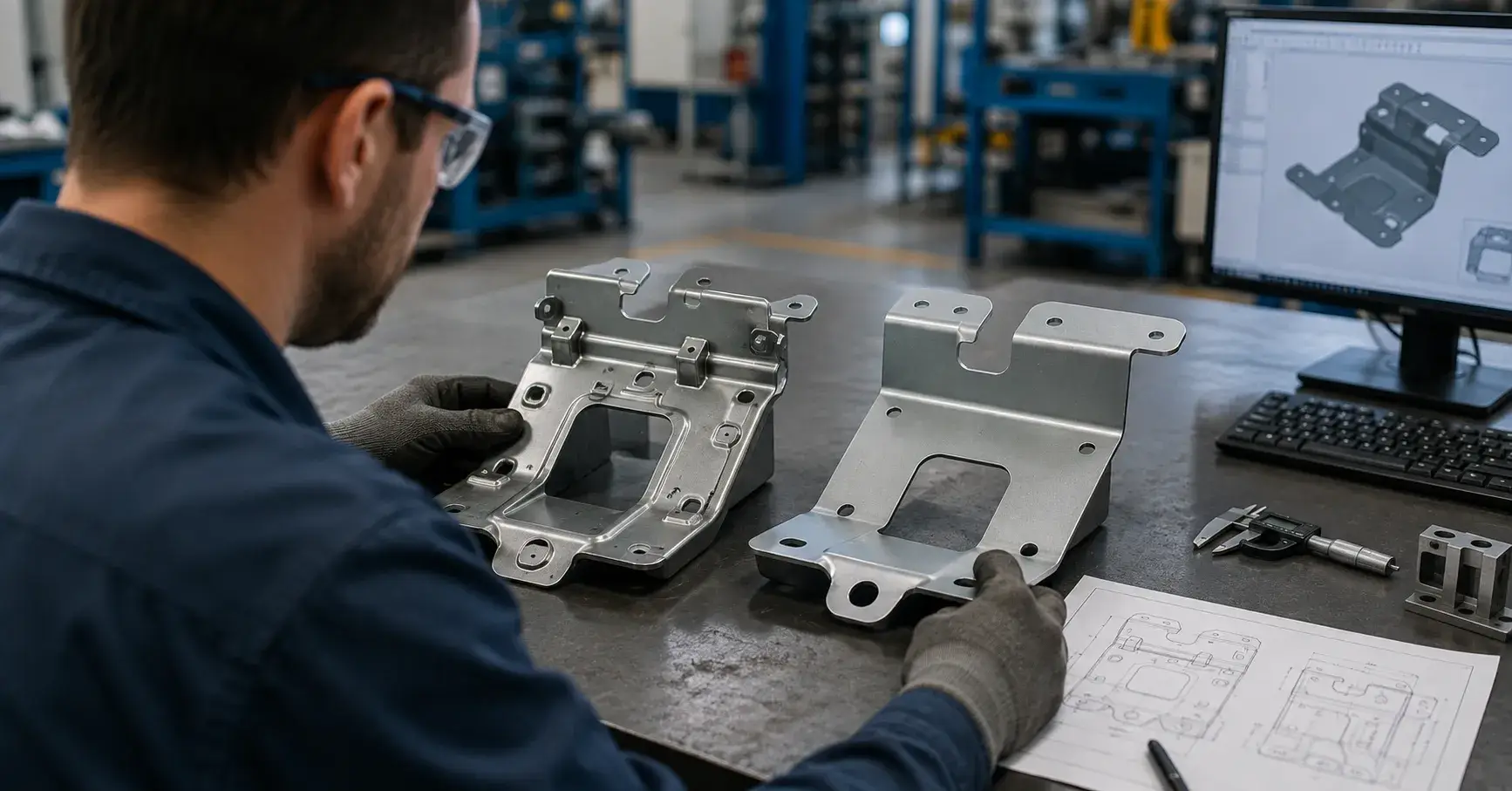
You can often reduce stamping cost before the supplier opens the CAD file. Start with these steps:
- Confirm the real annual volume.
- Separate critical tolerances from general tolerances.
- Use standard material grades where possible.
- Avoid sharp internal corners if a radius is acceptable.
- Keep holes away from bends and edges when the function allows it.
- Combine features only when they truly help the part.
- Decide whether cosmetic finish is needed on all surfaces.
- Share mating part information for fit-critical features.
- Provide both 2D drawings and 3D CAD.
- Tell the supplier what can change and what cannot.
The goal is not to weaken the design. The goal is to remove cost that does not improve function.
What To Include In A Metal Stamping RFQ
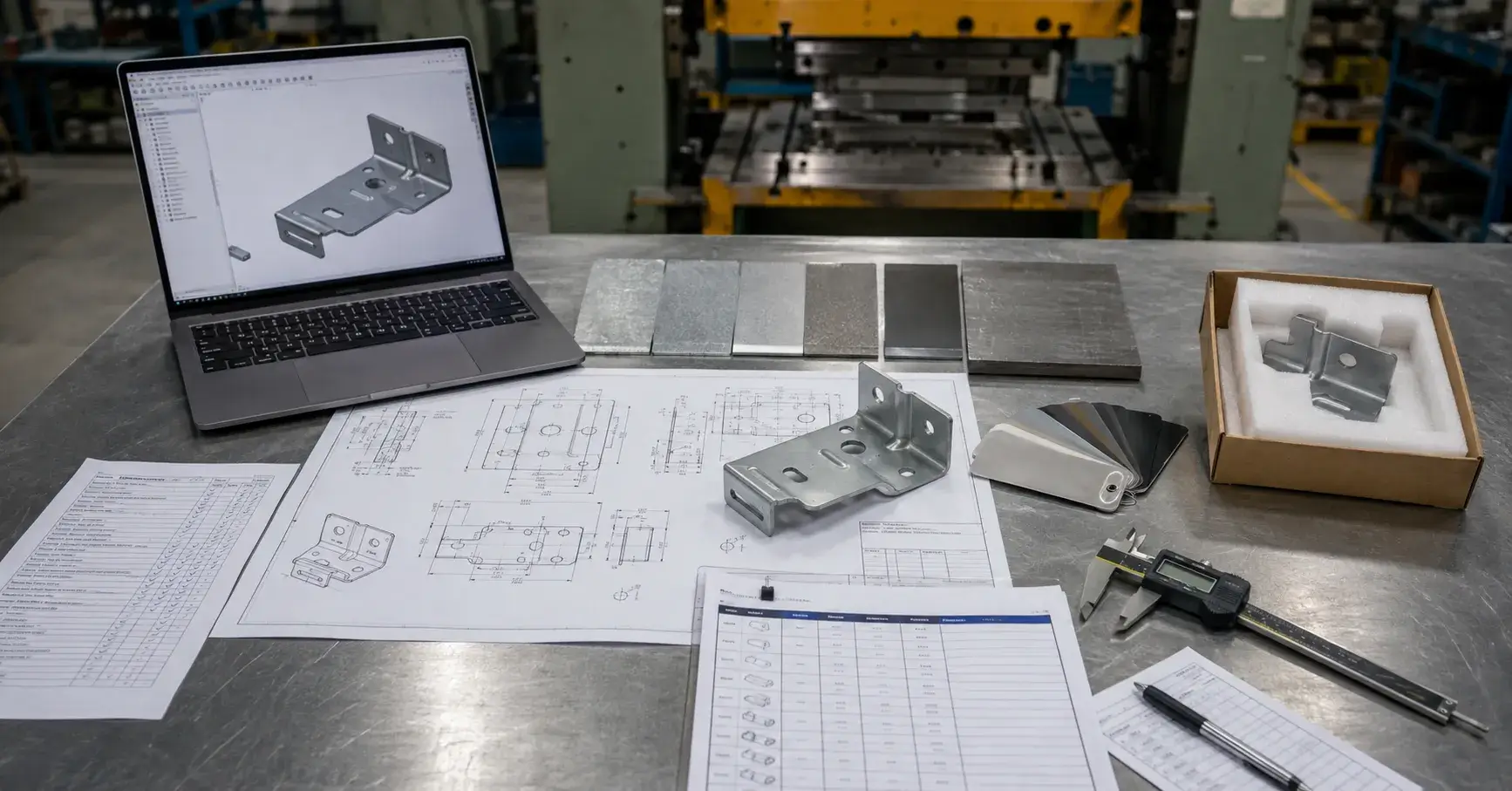
A complete RFQ helps the supplier quote faster and more accurately. Include:
- 2D drawing in PDF format
- 3D CAD file
- Material grade and thickness
- Annual volume
- First order quantity
- Target production schedule
- Finish requirement
- Burr direction and burr limit, if important
- Critical dimensions
- Inspection report requirements
- Packaging requirement
- Shipping destination
- Current sample or photo, if available
- Target cost, if you have one
If you are not sure about material, tooling type, or tolerances, say so. A good supplier can quote options instead of forcing one path too early.
Why Two Metal Stamping Quotes Can Look Different
Two suppliers may quote different prices because they are making different assumptions. One may assume simple inspection. Another may include full reports. One may build a production-grade die. Another may quote a simpler tool. One may include finishing and packaging. Another may leave them out.
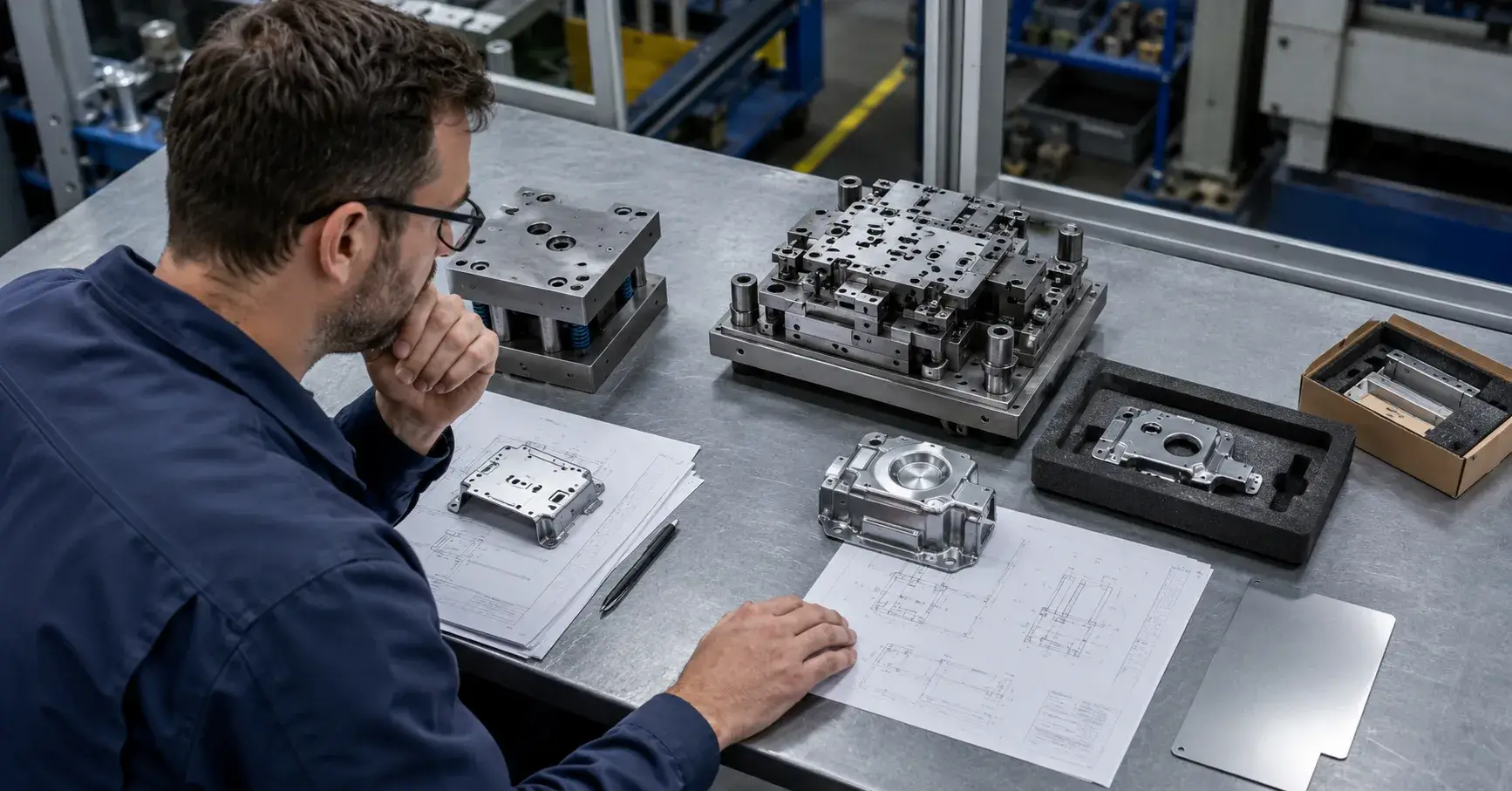
Before choosing a supplier, compare:
- What tooling is included
- Who owns the tooling
- Expected tool life
- What material price is assumed
- What inspection is included
- Whether finish and packaging are included
- Lead time for tooling and production
- Revision change process
- Payment terms
- Logistics terms
A clear quote should reduce risk, not hide it.
Conclusion
Metal stamping cost depends on the full production plan, not only the part shape. Material, tooling, volume, tolerances, geometry, finishing, inspection, lead time, and packaging all affect your quote.
The best way to control cost is to involve your supplier early. Share the drawing, CAD file, material target, annual volume, quality needs, and launch schedule. Then ask where the design can be simplified without hurting function.
At ZAK, we help buyers review stamping designs, build tooling, run production, manage finishing, and control quality under one roof. If you are preparing a new stamped part project, you can contact ZAK for a quote and send your drawings for review.
[^1]: Review ASTM A1008/A1008M when you need a formal reference for cold-rolled carbon, structural, HSLA, and drawing steel sheet designations used in stamped parts.
[^2]: Use FRED's iron and steel PPI series to understand why material market movement can affect the timing and validity of stamping quotes.
[^3]: Check ASME Y14.5 when your team needs a shared reference for dimensioning, tolerancing, datum structures, and GD&T expectations.
[^4]: Review OSHA 1910.217 when evaluating mechanical power press requirements and why safe press operation must be part of a real stamping process.
[^5]: Explore ISO 9001 if you need a buyer-facing reference for quality management systems, process control, and continuous improvement expectations.
[^6]: Use AIAG's PPAP publication page when automotive or controlled-production buyers need to verify the reference behind production part approval documentation.