Anodizing Services
ZAK can do Type II decorative and Type III hardcoat anodizing for your stamped and fabricated aluminum parts based on your requirements, managed through our vetted partner network and inspected under ZAK’s ISO & IATF quality system. We provide one-stop service to save your time and cost.
What Is Anodizing?
Anodizing is an electrochemical process that converts the surface of aluminum into a hard, durable oxide layer. Unlike paint or plating — which sit on top of the metal — the anodized layer grows from the aluminum itself. It becomes part of the metal, so it won’t peel, flake, or chip.
The result is a surface that resists corrosion, withstands wear, accepts vibrant colors, and provides electrical insulation — all without adding a separate coating material.
Anodizing is one of the most environmentally friendly finishing processes available. It produces no heavy metals or hazardous waste, and the anodized layer is chemically stable and non-toxic.
Anodizing vs. Electroplating: Anodizing converts the aluminum surface into a protective oxide layer, while electroplating deposits a separate metal layer onto the part. Not sure which your parts need? Our engineering team can recommend the right finish.
Surface Preparation
Parts are cleaned and etched to remove oils, oxides, and contaminants. This ensures uniform oxide growth across the entire surface.
Electrolytic Bath
Parts are submerged in an acid electrolyte solution and an electrical current is applied. Oxygen ions react with the aluminum surface, forming a controlled oxide layer.
Coloring
The porous oxide layer absorbs dyes or metallic salts, producing a range of colors — from clear and black to red, blue, gold, and custom shades.
Sealing
The pores are sealed in a hot water or chemical bath to lock in color and maximize corrosion resistance.
Anodizing Types Available
Your anodizing specification depends on what the part needs to do. We offer both standard anodizing types, each with distinct properties, thickness ranges, and application profiles.
Type II — Sulfuric Acid
The most widely used anodizing process. Produces a uniform oxide layer that accepts dyes well — the standard choice for corrosion protection and color.
Type III — Hardcoat
Significantly thicker, denser oxide layer with exceptional hardness — comparable to tool steel. Superior wear and abrasion resistance.
Which Type Do You Need?
Choose Type II when…
Your priority is appearance, color options, and corrosion protection. Typical applications include enclosures, panels, bezels, consumer-facing components, and parts that need to match a specific color.
Choose Type III when…
Your priority is surface hardness, wear resistance, and long-term durability. Typical applications include sliding mechanisms, bearing surfaces, high-load components, and parts exposed to abrasion or harsh chemicals.
Aluminum Alloy Compatibility
5xxx & 6xxx Series
5052, 5083, 6061, 6063 — most consistent, uniform, attractive finishes. Standard choices when cosmetics matter.
7xxx Series
7075 — effective for engineering applications but may yield slightly darker or less uniform color.
2xxx & Casting Alloys
2024 and high-silicon alloys — copper/silicon interfere with oxide formation. Colors may be inconsistent. Discuss early.
How We Manage Your Anodizing
Part Fabrication at ZAK
Your aluminum parts are stamped, laser-cut, bent, or welded at our 66,000 m² facility. Parts leave our floor dimensionally verified and surface-ready for anodizing.
Partner Coordination
We assign your order to a vetted anodizing partner based on the anodizing type, volume, color requirements, and certification needs your program requires.
Specification Package
ZAK provides every detail: anodizing type, target oxide thickness, color/dye reference, masking locations, sealing requirements, and acceptance criteria.
Incoming Inspection
Every returning batch is inspected in our QC lab before it reaches your shipping container. No exceptions.
What We Inspect
| Instrument | What It Checks | Model |
|---|---|---|
| Coating thickness gauge | Oxide layer thickness per spec | TC-880 |
| Salt spray tester | Corrosion resistance validation | HT-YW-90 |
| Gloss meter | Surface appearance consistency | WGG60-Y4 |
| Color difference meter | Color consistency across batches | CR-400 |
Design Considerations for Anodized Parts
Getting the best results from anodizing starts at the design stage. These guidelines help you avoid common issues and reduce the need for rework.
Choose Your Alloy Early
Alloy selection has the most impact on appearance. 6061 and 6063 are standard for color consistency. High-strength alloys like 7075 or 2024 yield darker, less uniform color.
Specify Surface Prep
Anodizing amplifies surface condition. Machine marks and scratches become more visible, not less. Specify bead blasting, brushing, or polishing if cosmetics matter.
Account for Dimensional Growth
The oxide layer grows outward and inward. Type II adds ~50% of thickness per side. Type III grows equally both directions. Factor this into tolerance-critical features.
Radius Sharp Edges
Oxide layer thins at sharp edges. Specify minimum 0.5 mm radii on edges needing full protection — especially important for Type III hardcoat.
Designate Masking Areas
Threaded holes, mating surfaces, and electrical contacts should be masked. Call out masking locations on your drawing or we'll recommend optimal placement.
Plan for Racking Marks
Parts must be racked during the bath, leaving small contact marks. Designate non-cosmetic racking points on your drawing for best results.
Specify Color Tolerance
Minor batch-to-batch color variation is inherent. If tight consistency is required, specify a ΔE tolerance upfront. We maintain ΔE < 1.0 when documented.
Anodized = Non-Conductive
The oxide layer is an electrical insulator. If grounding or electrical contact is needed, those areas must be masked or have the oxide removed post-process.
Not sure how anodizing affects your part design?
Anodizing Applications Across Industries
Anodized aluminum parts serve applications where corrosion resistance, surface hardness, and appearance all matter.
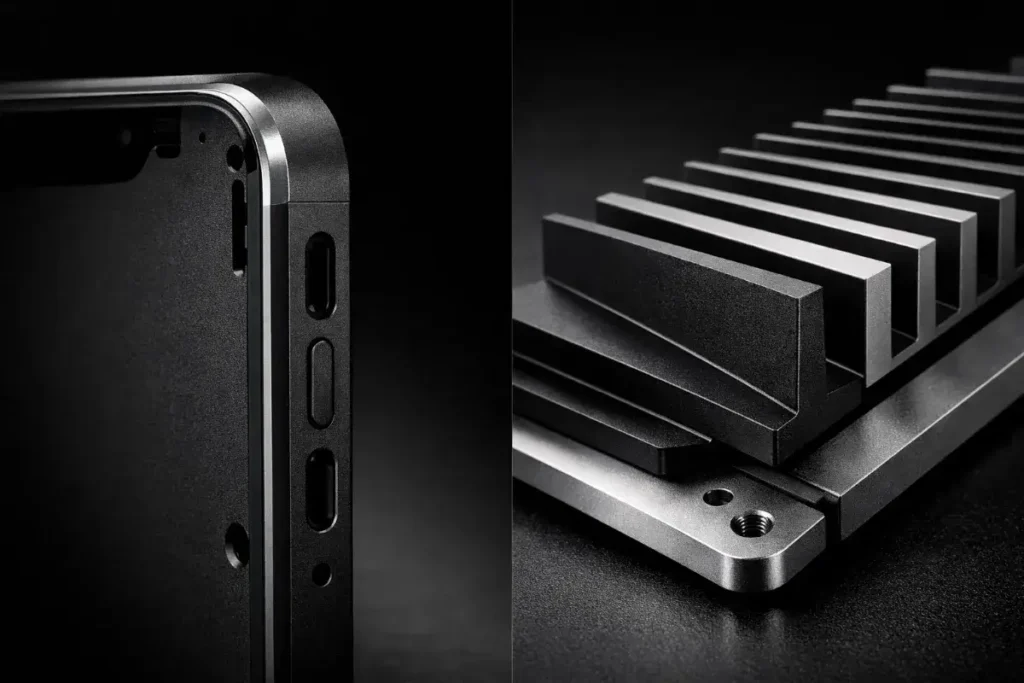
Consumer Electronics
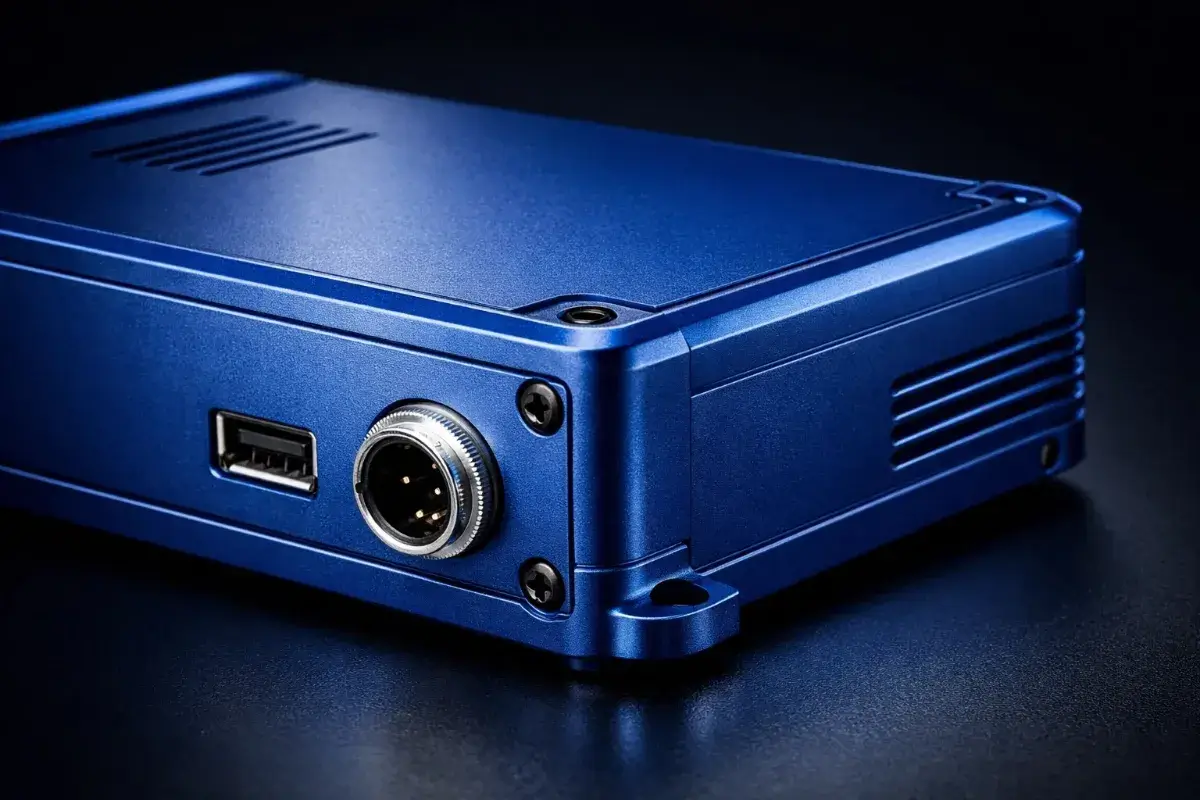
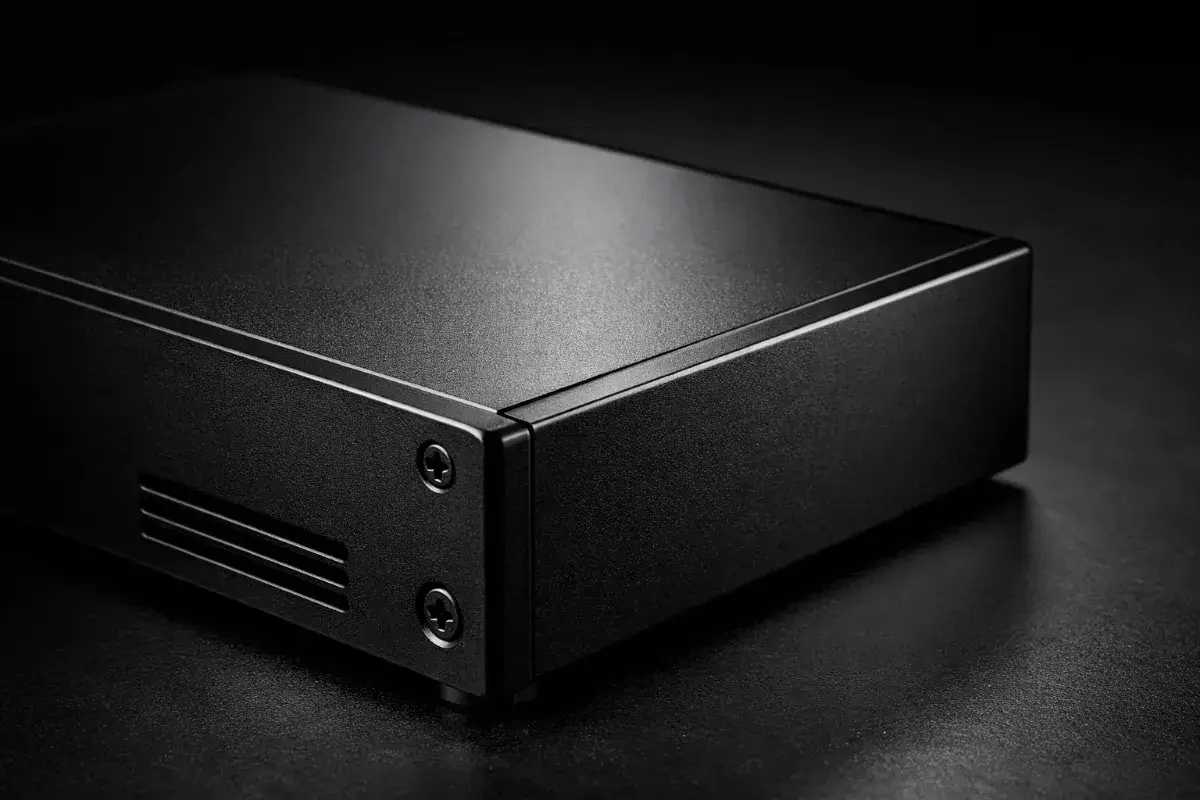
Anodized enclosures, bezels, heat sinks, and trim. Type II in black, silver, or custom colors for premium scratch resistance.
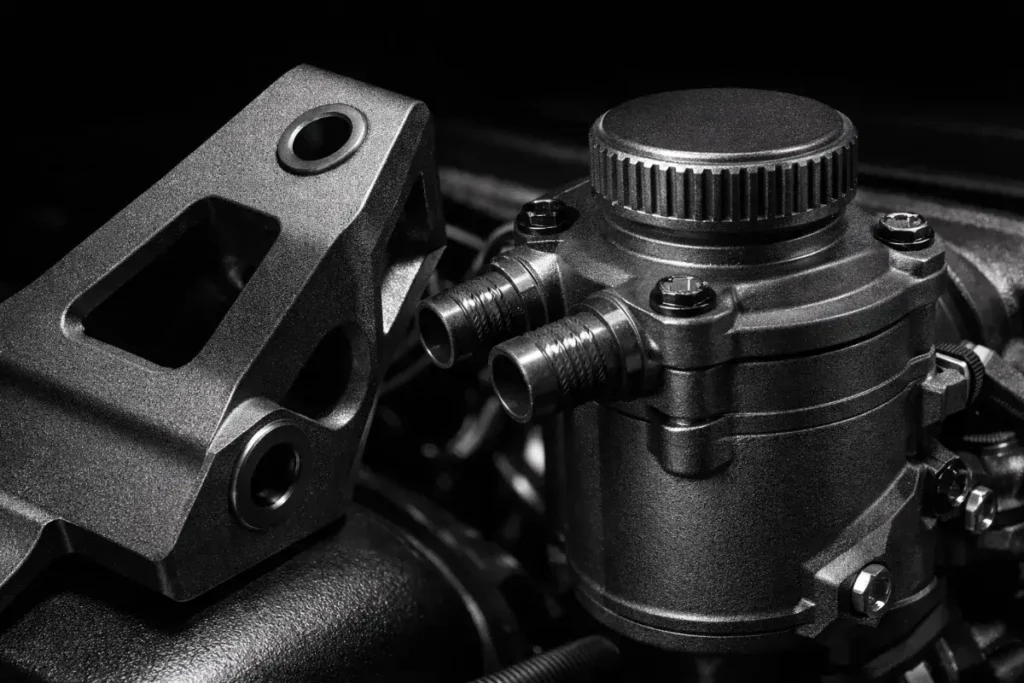
Automotive
Structural brackets, trim, and interior hardware. Type III hardcoat for under-hood components.
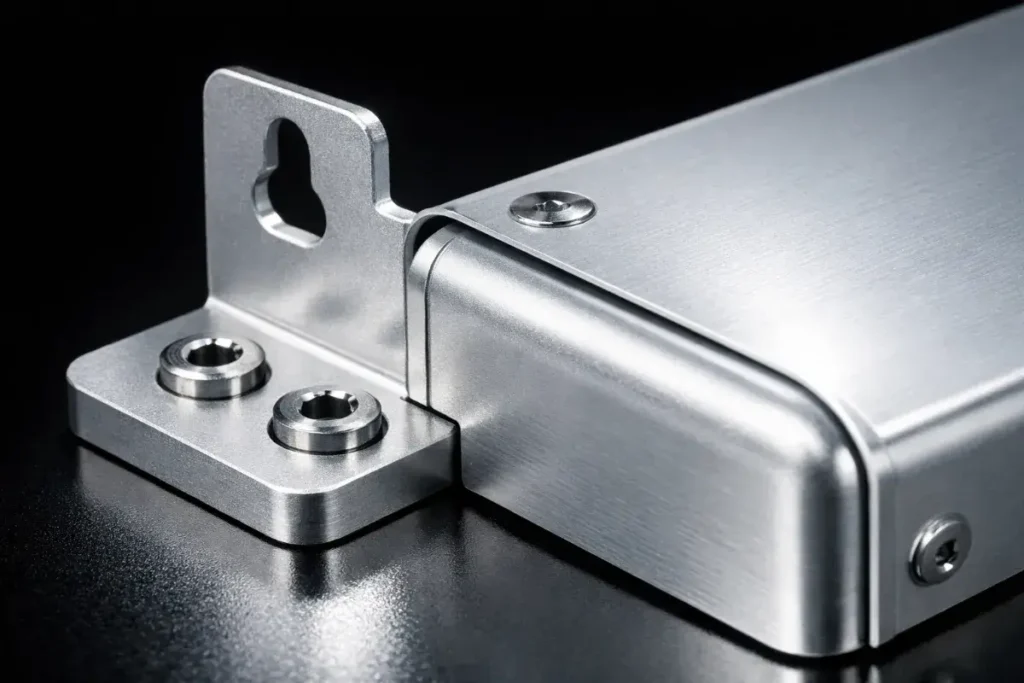
HVAC & Appliances
Panels, covers, and mounting brackets. Type II for long-term corrosion resistance in humid environments.
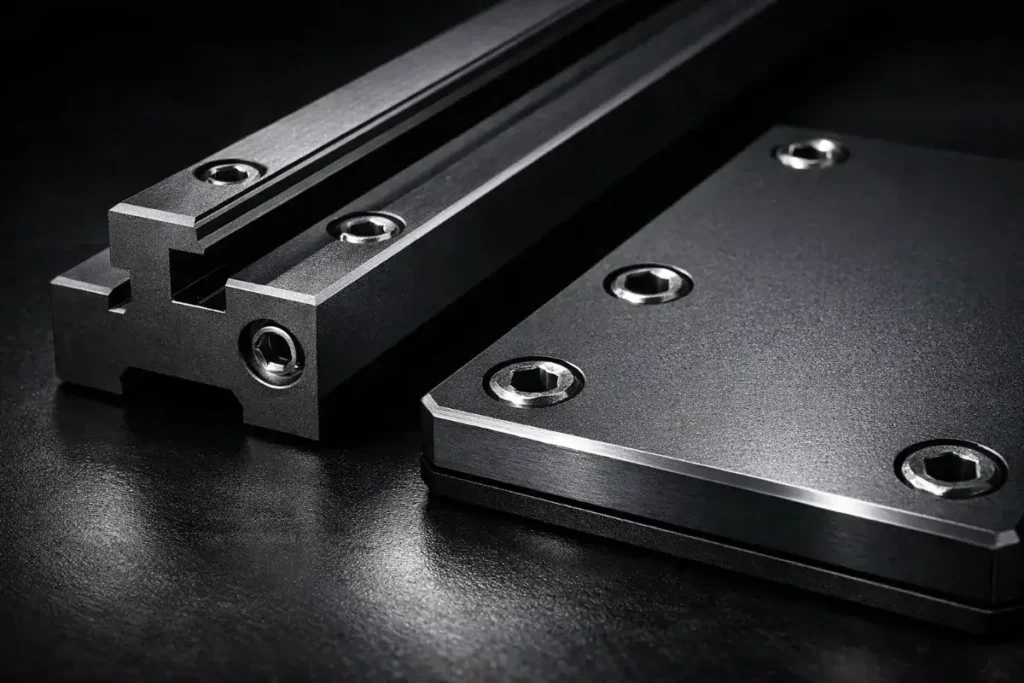
Industrial Equipment
Hardcoat-anodized guide rails, wear plates, and housings. Type III for extended service life under constant friction.
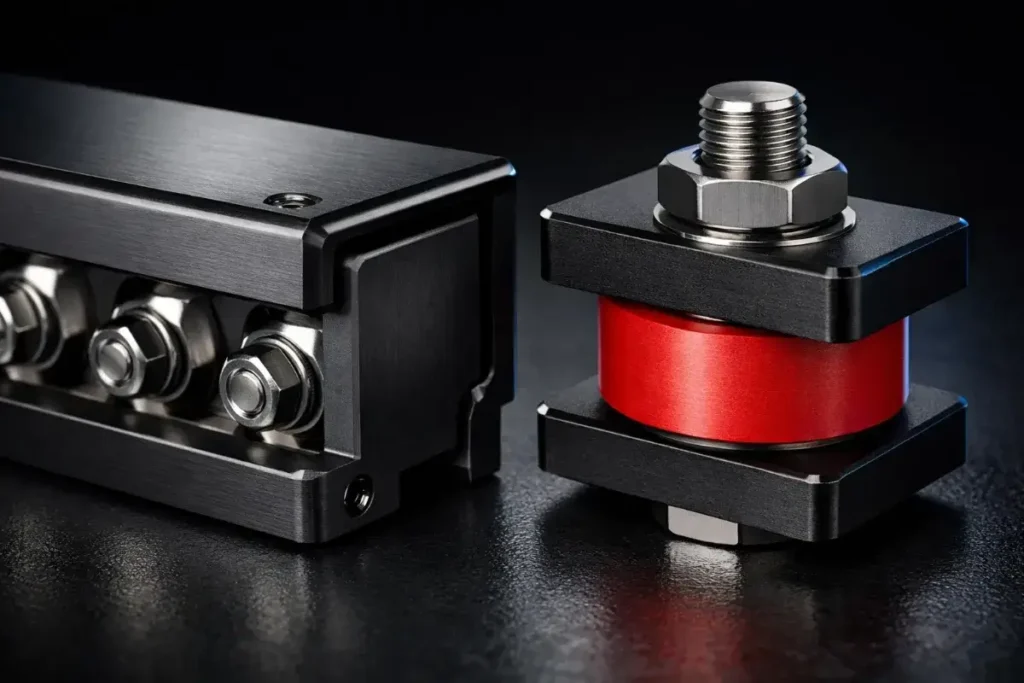
Electrical & Power
Bus bar covers, insulation spacers, and enclosures where the non-conductive oxide layer is a functional requirement.
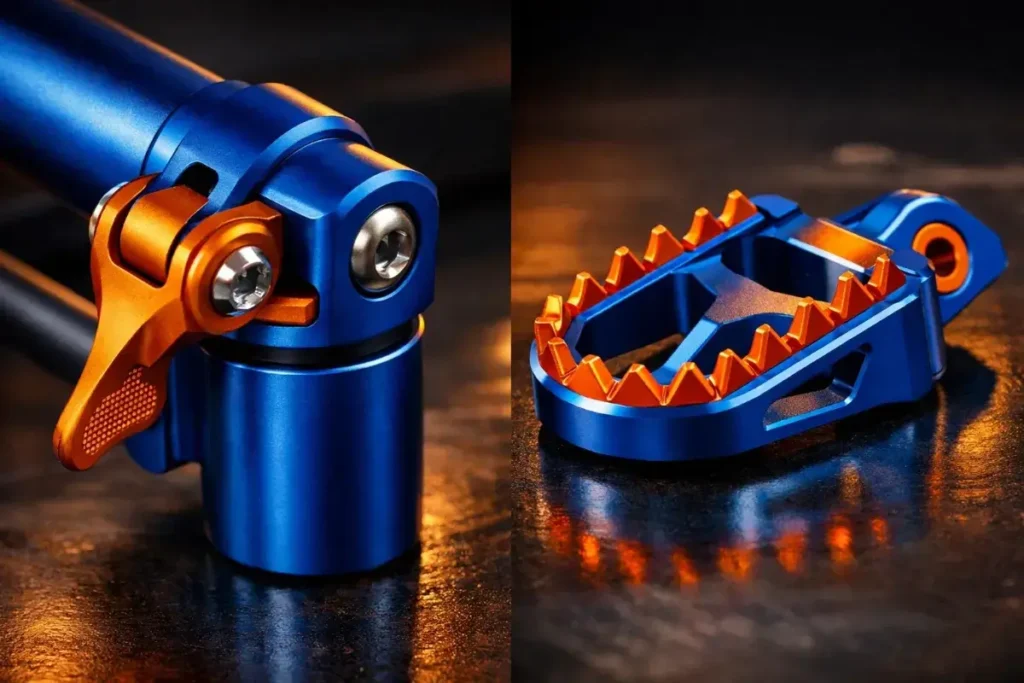
Consumer Products
Outdoor furniture hardware, sporting goods, and lighting fixtures. Type II for UV-stable colored finishes.
Anodizing vs. Other Surface Finishes
Choosing the right finish depends on your base material, performance requirements, and budget. Here’s how anodizing compares to the other finishes we offer.
| Factor | Anodizing | Powder Coating | Electroplating |
|---|---|---|---|
| Primary materials | Aluminum | Steel, aluminum, most metals | Steel, copper, aluminum, most metals |
| How it works | Converts surface — part of the metal | Applies separate polymer layer | Deposits thin metal layer |
| Typical thickness | 8–150 µm | 50–150 µm | 5–50 µm |
| Hardness | High (Type III rivals tool steel) | Moderate | Varies by plating metal |
| Color options | Good (Type II); limited (Type III) | Extensive — RAL, Pantone, custom | Limited to plating metal color |
| Corrosion resistance | Excellent | Excellent (up to 1,000hr salt spray) | Good to excellent |
| Conductivity | Non-conductive | Non-conductive | Conductive |
| Peeling risk | None — part of the metal | Low with proper pre-treatment | Low with proper adhesion |
Choose Anodizing
Your parts are aluminum and you need hardness, wear resistance, or integrated color that won't peel.
You're in the right place ✓Choose Powder Coating
You need thick corrosion protection on any metal, wide color selection, or coverage on large/complex parts.
Learn about powder coating →Choose Electroplating
You need a metallic finish, electrical conductivity, or functional plating like solderability or EMI shielding.
Learn about electroplating →Anodized Color Options
The final appearance depends on three variables: the aluminum alloy, the surface preparation, and the dye or coloring process.
Finish Textures
Matte (Bead Blasted)
Uniform, non-reflective surface. Hides minor imperfections. Most common for industrial and consumer electronics enclosures.
Satin (Brushed)
Fine, directional lines. Common for decorative panels, trim, and architectural hardware.
Bright (Polished)
Reflective, high-gloss finish. Used for premium consumer goods and decorative components.
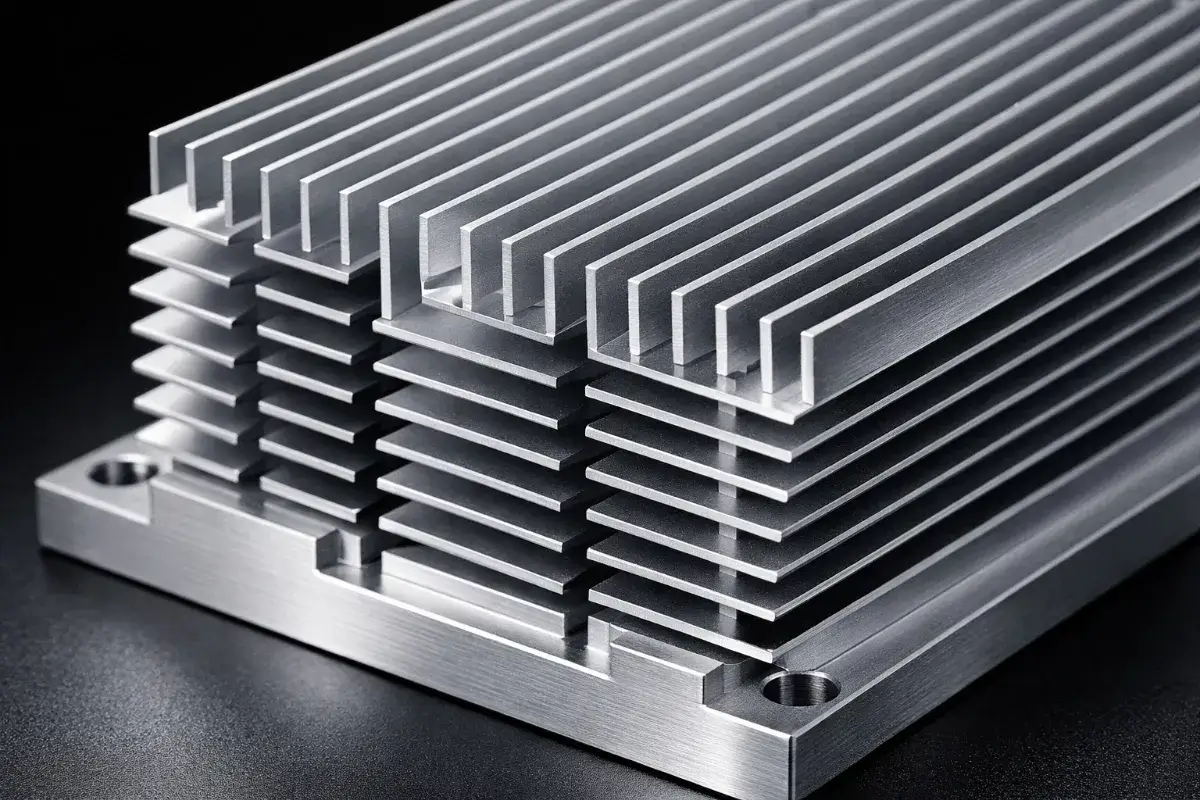
Part Gallery
Tool & Die FAQs
Common questions from procurement managers and design engineers evaluating our tooling capabilities.
What aluminum alloys can be anodized?
Most aluminum alloys can be anodized, but results vary. 6061 and 6063 produce the most consistent finishes. 7075 anodizes well but may yield slightly darker color. 2024 and other high-copper alloys are more challenging. Our engineers advise on expected finish quality for any alloy.
What's the difference between Type II and Type III?
Type II produces an 8–25 µm oxide layer with excellent color absorption, ideal for decorative and moderately protective applications. Type III (hardcoat) produces a 25–150 µm layer with exceptional hardness and wear resistance, ideal for engineering applications where surface durability is critical.
Can anodized parts be assembled with other components?
Yes. ZAK can fabricate, anodize, and then assemble your parts with non-anodized components, hardware, gaskets, or sub-assemblies on our 6 assembly lines. We mask mating surfaces before anodizing to ensure proper fit during assembly.
How does anodizing affect part dimensions?
The oxide layer grows partially outward and partially inward. For Type II, approximately 50% of the thickness adds to each surface. For Type III, growth is roughly equal in both directions. We factor this into fabrication dimensions for tolerance-critical features.
What colors are available?
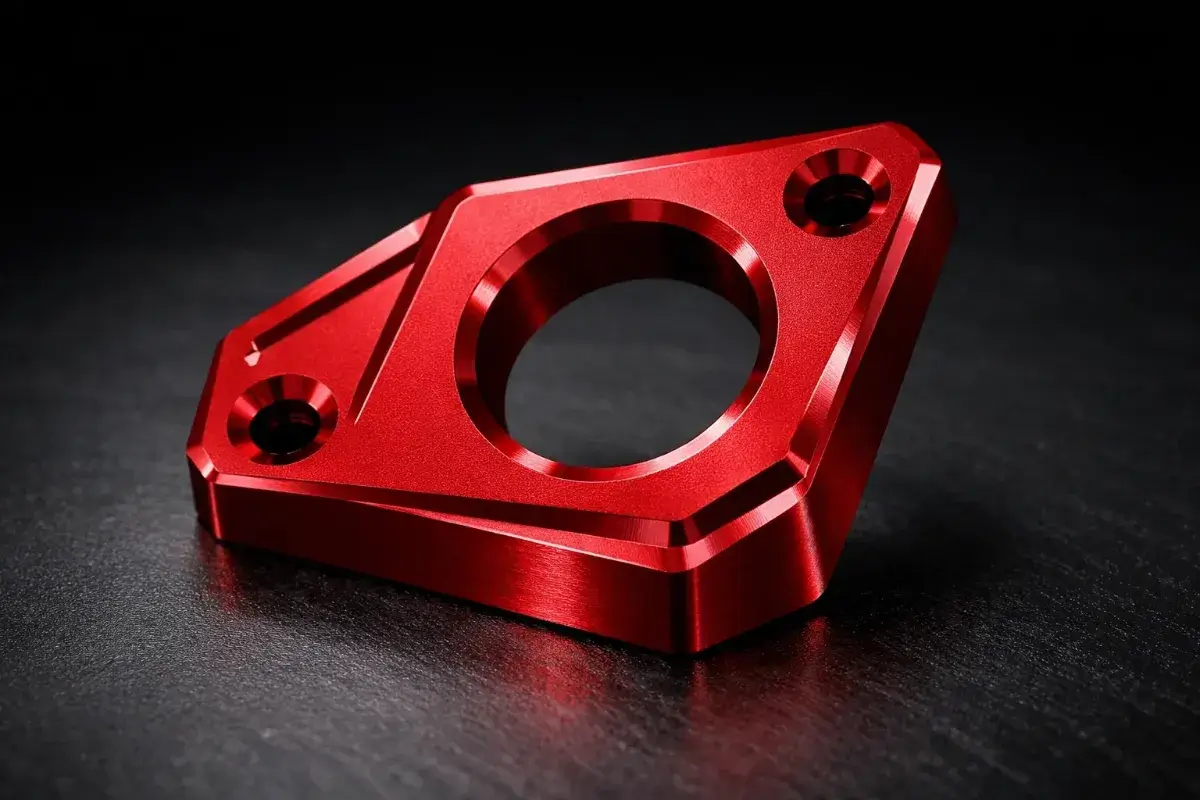
Standard colors include clear, black, red, blue, gold, green, and bronze. Custom colors available on request. Color consistency maintained to ΔE < 1.0 when specified. We provide samples for approval before production runs.
What quality checks are performed?
Every batch undergoes incoming inspection: coating thickness (TC-880 gauge), corrosion resistance (salt spray testing), surface appearance (WGG60-Y4 gloss meter), and color accuracy (CR-400 color difference meter). Parts that don’t pass are returned for rework before shipping.
Related Surface Finishing Services
Powder Coating
In-house 525m automated line with Gema Switzerland spray guns. Up to 1,000 hours salt spray resistance.
Electroplating
Zinc, nickel, chrome, and specialty plating. Managed through our vetted partner network with QC inspection.
E-Coating
Cathodic electrocoating for uniform corrosion protection on complex geometries and interior surfaces.
Ready to Get Your Aluminum Parts Anodized?
Upload your drawing. Tell us the anodizing type, color, and volume. We’ll respond with a quote and DFM feedback within 24 hours.